
Debunking myths about judicial appointments
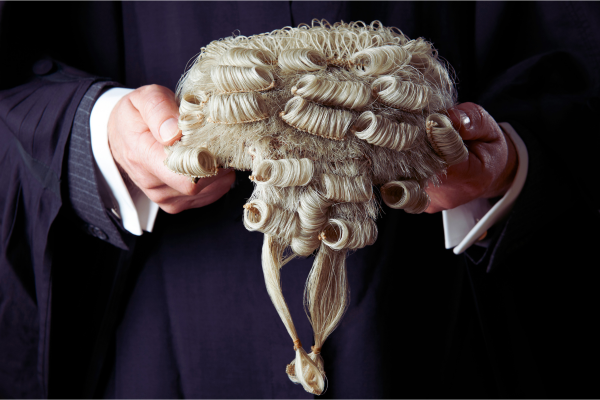
The judiciary plays an important role in our society. But there are a lot of commonly held misconceptions about judges – who appoints them, their backgrounds and who can be a judge. In this blog, we’ll address some common myths about the judiciary and provide some insight into the judicial appointments process along the way.
MYTH: Judges are chosen by the Prime Minister
FACT: In England and Wales, a statutory independent body – the Judicial Appointments Commission (JAC) – selects candidates for most judicial roles. We were established in 2006 following an Act of Parliament and have a legal duty to select candidates solely on merit and of good character.
After a rigorous, fair and open recruitment process, we recommend candidates to an Appropriate Authority for appointment. Depending on the role, this could be the Lord Chancellor, Lord Chief Justice or Senior President of Tribunals. Most senior appointments are formally appointed by the King on the advice of the Prime Minister. Although the King has the authority to make these appointments, by constitutional convention, he acts on the advice of ministers.
MYTH: Becoming a judge is about who you know
FACT: It is our statutory duty to make recommendations only on merit. When reviewing online applications, we use a name-blind approach which means that names are removed from applications before we assess them. All candidates are assessed against the same skills and abilities framework.
As part of the selection process, candidates are required to nominate two independent assessors. They may nominate anyone as an independent assessor. The key issue is that they know their professional work and be able to provide evidence as against the skills and abilities framework. They might be a client, a local authority official, head of chambers, partner in a law firm or perhaps, a judge or magistrate. The important point is they know the candidate well.
As well as independent assessors, the law requires the JAC to consult a ‘statutory consultee’ before making a recommendation for appointment. This means that we draw on the widest range of evidence available to ensure that only the most meritorious candidates of good character are recommended. Statutory consultation material is not given greater weight than any other source of evidence.
MYTH: You need to be a barrister to become a judge
FACT: Barristers aren’t the only legal professionals who are qualified to become judges. 62% of tribunal judges and 31% of court judges are from non-barrister backgrounds, the majority of whom are qualified as solicitors.
However, solicitors are still underrepresented in the judiciary and therefore are one of the groups the JAC provides support for through our Targeted Outreach Programme.
It’s also important to note that the post-qualification experience required to become a judge does not just include courtroom experience or working in private legal practice. Eligible types of post-qualification experience are varied, and include, but are not limited to, acting as an arbitrator, practicing as a lawyer, and teaching or researching law. You can find out more about what counts as post-qualification experience on our legal eligibility information page.
MYTH: You must have a legal background to be selected for a judicial role
FACT: Judges do need to be legally qualified. But there are many judicial roles in tribunals which do not require a legal background, such as specialist non-legal members. These roles often involve sitting on a panel alongside a judge to provide specific knowledge or experience on cases.
Some of these roles require specific qualifications. For example, those appointed to the role of Fee-paid Valuer Member of the First-tier Tribunal, Property Chamber have to be chartered surveyors who are members of the Royal Institution of Chartered Surveyors. Other non-legal roles do not need a specific accreditation but instead require applicants to have particular professional or life experience. This is the case with the role of Fee-paid Disability Qualified Tribunal Member of the First-tier Tribunal, Social Entitlement Chamber for which candidates must either have a disability or have worked with disabled persons in a professional or voluntary capacity.
The experience required can vary greatly depending on the role. If you’d like to check whether you’re eligible for a non-legal role, please see our non-legal eligibility information page.
MYTH: All judges wear wigs and use gavels
FACT: Unlike in popular culture, where judges are almost universally depicted in a wig and gown, court dress for judges in England and Wales varies significantly depending on the role.
High Court Judges and Circuit Judges don’t generally wear wigs and gowns anymore, only when sitting on criminal cases. Recorders also wear wigs and gowns when hearing criminal cases. District Judges in the County Court might wear gowns. In tribunals, judges dress in office wear.
However, there is one thing that all judges in the UK have in common – none of them use gavels!
Next steps
If you’re interested in applying for a judicial role, you can see our current and upcoming legal and non-legal roles on our website, and you can subscribe to our newsletter to stay up to date.