
Marking 20 years of independent judicial appointment
The Lady Chief Justice reflects on two decades of open, merit-based judicial appointments since the JAC was established.
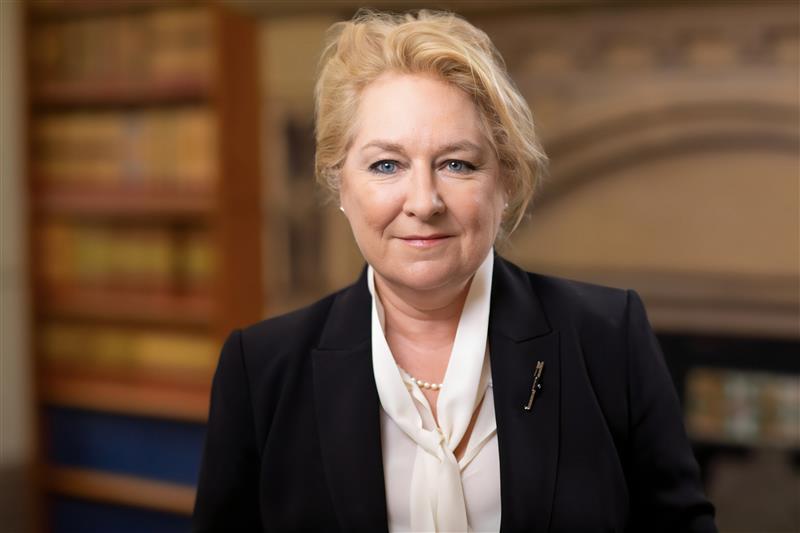
Sometimes it is only when we pause and take stock that we can appreciate how much has changed. In 2005 a profoundly important shift in the justice system, and the way that judges were appointed, took place with Parliament’s passing of the Constitutional Reform Act. The Act gave government ministers an obligation to uphold the independence of the judiciary and provided for the creation of an independent body for open recruitment. The Judicial Appointments Commission (JAC) was formally established the following year.
This reform was rooted in the fundamental principle that an independent judiciary is essential to the rule of law and, by extension, to public confidence in our justice system. It is entirely correct that appointments should be made away from party political influence and should be openly advertised to all qualified candidates. Since its formation the JAC has overseen these processes to ensure judicial independence and integrity.
I held the role of Vice Chair of the JAC from 2020 to 2023, so I have first-hand experience of the thoroughness of its processes. Now that I am Lady Chief Justice of England and Wales I can see the recruitment process from the other side, as I steer the judiciary through its continued evolution.
As Lady Chief Justice, it is my responsibility to lead the judiciary and to safeguard the independence, integrity and impartiality of our judicial office holders. To do this, the judiciary requires talented people from a wide range of backgrounds, which in turn depends on the strength of the appointments system. So I take a keen interest in the work of the JAC. Our roles are distinct from one another, but also complementary.
One of my top priorities is to improve the diversity of the judiciary so that it better reflects the society it serves. In the past twenty years, there has been real progress on diversity across gender, professional background and ethnicity. For example, now 44% of judges are women – up from only 26% in 2006 – and we have 80% more judges from an ethnic minority background – from 5.6% of judges in 2006 to 11.9% today. These changes in the make-up of our judiciary bring greater legitimacy and a broader range of perspectives to decision-making in our justice system.
However, the pace of change has not been as fast as I would wish. The judiciary is a pipeline profession, dependent on the diversity in chambers, solicitors’ offices and elsewhere, in the people who will become the judges of tomorrow. So increasing diversity is a collective effort that requires sustained attention across educational institutions, the legal system, the judiciary and from the JAC.
The influence of the Constitutional Reform Act has also reached beyond our shores, a reflection of the high esteem in which the legal system of England and Wales is held across the world. In particular, the system of judicial appointments has been studied internationally, and in some cases adopted, in recognition of the clear benefits of the open and merit-based model overseen by the JAC.
As we mark 20 years of the JAC there is much of which, collectively, we should be proud. We have an appointments system that is open, fair and independent. Merit is at the heart of every appointment, and we have broadened the pool of applicants for judicial roles. Those who are appointed to judicial roles can be confident that they have earned their position. And the public – particularly those who come into contact with the justice system – can be sure that recruitment puts the top applicants in post. But the greatest achievement is perhaps more subtle – it has changed expectations in a way that we might not notice unless we recall the world back in 2005. Today, it is naturally assumed that judicial appointments will be made independently and on merit. That transformation is no small thing and the continued integrity of our justice system – and the public’s faith in that integrity – depends on it.
Holding a judicial office is one of the most important forms of public service. Judges make decisions in our courts and tribunals that can have far-reaching consequences for individuals, families, businesses and communities. They uphold rights, resolve disputes and navigate complex circumstances, often under significant pressure. I am immensely grateful to all those who put themselves forward for judicial roles and to those who play a part in judicial appointments. Your work is seen and appreciated, thank you.
The Rt Hon the Baroness Carr of Walton-on-the-Hill, The Lady Chief Justice of England and Wales
Get the latest updates
Judging your Future is the JAC’s monthly newsletter. It’s a great way to view the latest vacancies and to find out as soon as roles are added to our rolling programme of selection exercises.